
Photography Tours in the Argentine Northwest
Discover the NOA Through Your Lens — Led by Local Professional Photographers.
The Argentine Northwest (Noroeste Argentino, or NOA) is one of the most visually overwhelming destinations in South America. Towering volcanoes, rainbow-painted mountain ranges, high-altitude salt flats that mirror the sky, and communities whose roots stretch back thousands of years — all of it waiting to be photographed.
Our Photography Tours in the Argentine Northwest are built for travellers who want to come home with extraordinary images. We know where to go, which villages and locations are worth planning your entire trip around.

Whether you’re drawn to the drama of the Puna de Atacama, the colour of the Quebrada de Humahuaca, or the faces of the native communities of the Andes, we’ll put you in the right place at the right moment — with a local photographer who understands both the area and the craft.
ARGENTINE NORTHWEST PHOTO TOURS & WORKSHOPS
Private, Tailor-Made Photo Tours
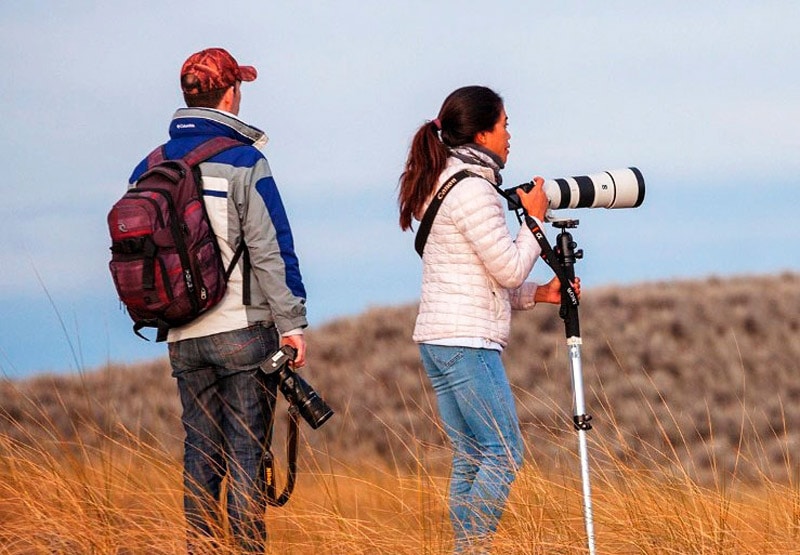
We put an Experienced Team of Travel Experts, Local and Photography Guides at your disposal to design our Tailor-Made Private Photo Experience.
A Photography Travel Experience entirely focused on your interests, whether it is Nature, Wildlife, People, Architecture, Landscape, Documentary, or Street Photography.
You can choose from any of the Destinations we offer, from Buenos Aires to the Argentine Northwest, the Iberá Wetlands and Misiones, to the remote Patagonia and Tierra del Fuego.
If you have a destination in mind that is not listed on our website, please ask us. We respond quickly.
The APW Signature: Premium Service Add-ons
We elevate your Photography Expedition with services designed for the traveler seeking Comfort, Security, and Exclusivity in Argentina’s most remote corners.

Private 4x4 Transportation
Exclusive mobility in vehicles equipped for rugged terrain, ensuring safe access to remote locations in Patagonia or the Puna.

Curated Accommodations
A handpicked selection of boutique hotels and historic estancias that blend local charm with high-end comfort standards.

24/7 Bilingual Logistics
Full technical and coordination support in both Spanish and English throughout your journey for a completely stress-free experience.
📸 Why the Argentine Northwest for Photography?
The NOA Through a Photographer's Eye
Few regions in the world compress so many distinct photographic worlds into a single journey. But what makes the Argentine Northwest truly singular is not the landscapes — extraordinary as they are.
It is the people. The native communities of the Quebrada and the Puna have been living in these valleys and plateaus for thousands of years, and their traditions — the languages, the rituals, the way they relate to the land and to Pachamama — are not museum pieces. They are alive, practiced daily, and visible to any photographer willing to slow down and pay attention.
This is not a destination for those who want to cover ground quickly. The NOA rewards patience and genuine human curiosity — the willingness to sit in a village square long enough to stop being a stranger, to accept a cup of mate or chicha.
Light
The high-altitude light of the Puna is unlike anything at sea level. At 3,500 to 4,500 metres, the air is thin, the atmosphere is dry, and the sun hits the landscape with an intensity that produces rich colours, dense shadows, and extraordinary golden hours. Sunrise over the Salinas Grandes — the vast white salt flat of Jujuy — is one of the most otherworldly photography experiences in Argentina. In the Quebrada de Humahuaca, the light rakes across the coloured mountains from the east each morning, illuminating the layered geology of the slopes in gradients of red, purple, orange and green that shift minute by minute.
Landscapes
The Argentine Northwest contains some of the most visually diverse terrain on the planet within a relatively compact area. In a single week's journey you can move from the bone-dry salt flats and volcanic craters of the Puna to the lush subtropical forests of the Yunga; from the deep red-rock canyons of the Calchaquí Valleys to the colonial whitewash of Salta. Every environment demands a completely different approach.
Culture and People
The native communities of the NOA — Quechua, Kollas, Aymara, and others — have maintained traditions, languages, and craft practices that predate the Spanish conquest by centuries. Portrait photography here requires genuine human connection, local knowledge, and time. Our guides have built those relationships over years of working in these communities. Festivals are the peak photographic moments: the Humahuaca Carnival in February, the Fiesta de la Pachamama in August, and the smaller local celebrations that fill the calendar throughout the year bring colour, movement, and cultural depth that is impossible to replicate in a studio.
Architecture and History
The NOA's colonial towns — Salta, Cafayate, Cachi, Molinos — are exceptionally photogenic. Whitewashed walls, cobblestone streets, baroque churches catching the late afternoon light, and the kind of slow urban pace that allows a photographer to work with patience and intention. The contrast between the colonial built environment and the dramatic natural landscapes surrounding these towns is one of the defining visual experiences of the region.

Argentine Northwest Greatest Photography Locations
Photography Tours in the Argentine Northwest: Salta as Your Gateway
Salta — La Linda, “The Beautiful” — is the natural gateway to the Argentine Northwest and a rewarding photographic destination in its own right. Its well-preserved colonial centre, with its pink cathedral, elegant cabildo, and shaded plazas, is best photographed in the late afternoon when the warm light rakes across the facades from the west.
The city is also a convenient base: from Salta you can reach the Quebrada de Humahuaca, the Calchaquí Valleys, the Puna, and the cloud forests of the Yunga within a few hours by road — allowing for extended day trips or multi-day circuits depending on your itinerary.
Key photographic subjects in and around Salta:
The Cathedral of Salta and the central plaza at blue hour / The MAAM (Museum of High Altitude Archaeology) — remarkable interior light and extraordinary cultural content / The San Lorenzo cloud forest, 15 minutes from the city centre, for birdlife and forest photography / The Tren a las Nubes (Train to the Clouds) departure point — a visual journey through the Andes toward the Puna of Salta

The Quebrada de Humahuaca: UNESCO Landscape Photography
The Quebrada de Humahuaca — a UNESCO World Heritage Site since 2003 — is the most celebrated photography destination in the Argentine Northwest, and one of the most visually distinctive valleys in South America.
The quebrada runs north to south, following the course of the Río Grande, and its walls are composed of geological layers spanning millions of years. The result is a landscape that seems impossibly painted: deep reds, burnt oranges, yellows, purples, and greens layered in horizontal bands that catch the light differently at every hour of the day.
Purmamarca and the Cerro de los Siete Colores are the visual centrepiece — best photographed in the morning before the tour buses arrive and the souvenir stalls open. The afternoon light is also exceptional for the mountain’s western face; plan to stay until golden hour.
Tilcara is the cultural hub of the valley — home to the pre-Inca Pucará de Tilcara fortress, several excellent museums, and a lively arts scene. The Pucará, photographed from below the valley or from the fortifications themselves, offers powerful compositional opportunities, especially with storm clouds building over the peaks.
Humahuaca itself — at the northern end of the valley — is more traditional and less touristic than Tilcara. Its colonial church, narrow streets, and the surrounding landscape of the Hornocal Mountains (the so-called “Hill of 14 Colours”) are among the most spectacular subjects in the entire region. The Hornocal requires a 45-minute drive on a dirt road followed by a walk at altitude.
The Argentine Puna de Atacama: High-Altitude Photography
For Landscape Photographers, the Argentine Puna is the defining experience of the NOA. A vast plateau stretching across Jujuy, Salta, and Catamarca at elevations above 3,500 metres, it is one of the most remote, extreme, and visually compelling environments in South America.
The Puna rewards those who approach it with patience and planning. The distances are enormous, the roads often unpaved, and the conditions can change rapidly — which is precisely why having an experienced local guide is not optional here. It is essential.
Key photographic destinations in the Puna:
The Salinas Grandes of Jujuy are best photographed at sunrise, when the low angle of the light turns the white salt surface into a reflective mirror and the mountains on the horizon appear to float. The famous “geometric patterns” of the salt extraction areas are most graphic from elevated positions — our guides know the angles.
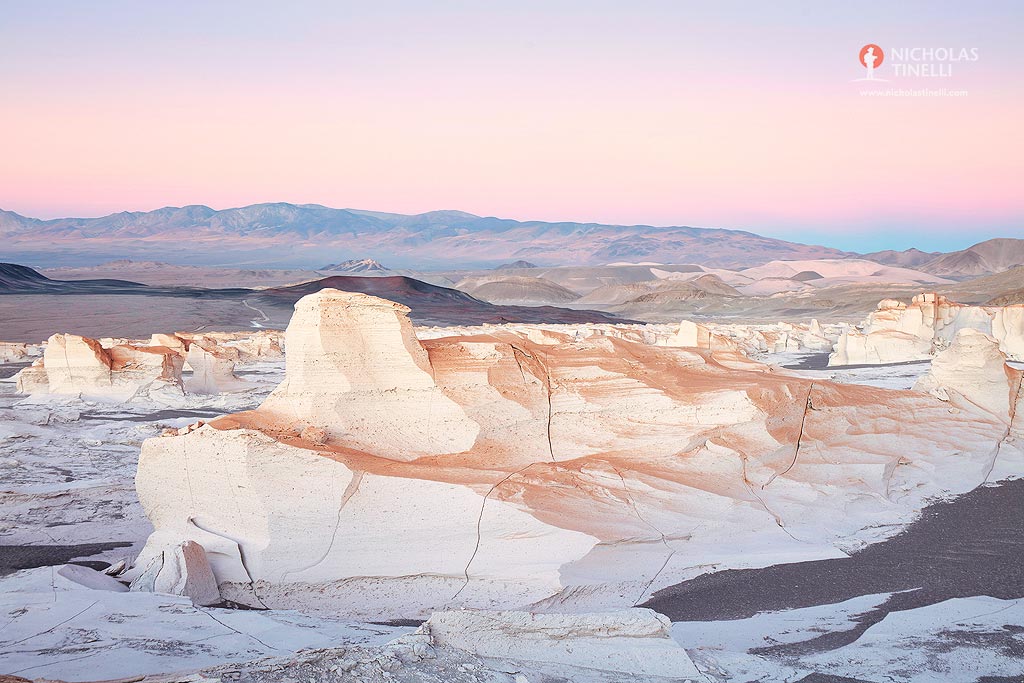
The Campo de Piedra Pómez (Pumice Stone Field) in Catamarca is one of the most surreal landscapes in Argentina: an expanse of pale pink and white volcanic rock formations that resemble nothing so much as a lunar surface. Twilight here — the sky turning violet above the pale formations — is extraordinary.
The Salar de Arizaro in Salta, one of the largest salt flats in the world, features the Cono de Arita — a perfectly conical formation rising from the white salt plain, one of the most iconic compositions in Argentine photography.
The Puna of Catamarca along the Ruta de los Seismiles (the route of the six-thousanders) takes photographers through a series of dramatic volcanic landscapes, with peaks exceeding 6,000 metres forming a backdrop to the plateau below.
Calchaquí Valleys: Landscapes, Wine, and Colonial Towns
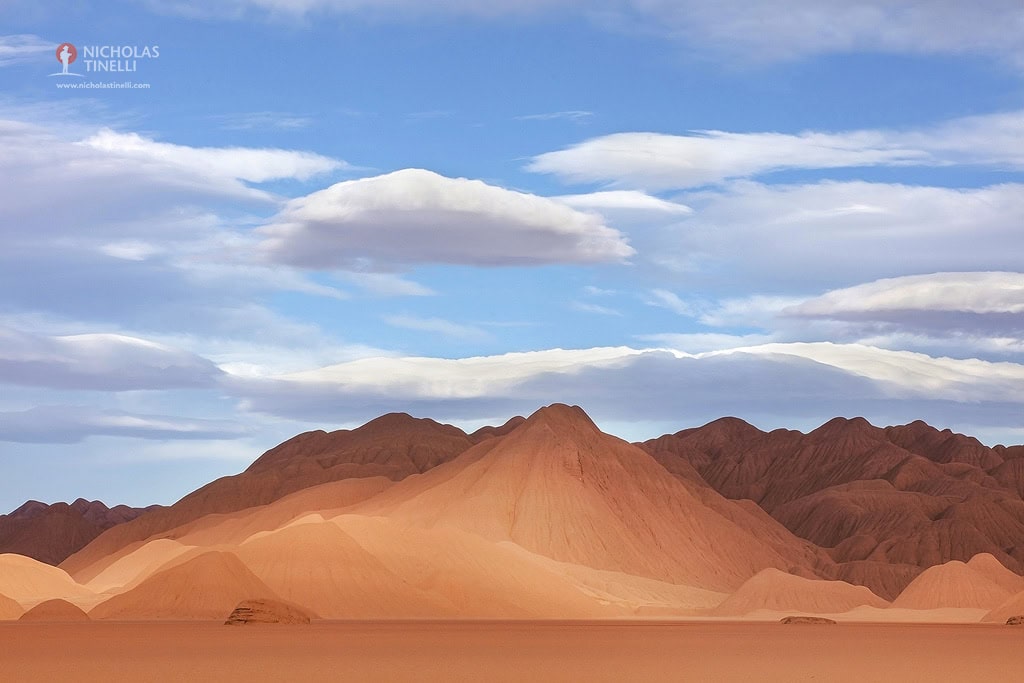
The Calchaquí Valleys (Valles Calchaquíes) offer a gentler, but no less rewarding, photographic experience than the Puna. Stretching through Salta, Tucumán, and Catamarca, the valleys combine dramatic red-rock canyon scenery with colonial architecture, vineyards, and some of the most characterful small towns in northwestern Argentina.
Cachi — a quiet village of whitewashed adobe and cobblestones in a valley surrounded by the peaks of the Andes — is one of the finest examples of colonial architecture in the NOA. The late afternoon light on the church facade and the view from the cemetery toward the mountains are exceptional.
Cafayate is Argentina’s high-altitude wine capital, home to the Torrontés grape and surrounded by red sandstone formations that rival anything in the American Southwest. The Garganta del Diablo (Devil’s Throat) canyon near the town is a dramatic landscape subject, best in the morning light.
Molinos and the road between Cachi and Cafayate along Ruta Nacional 40 — one of Argentina’s most legendary highways — are the kind of places where photography happens spontaneously: a herd of llamas crossing the road, an isolated church against a storm sky, a gaucho working cattle at dusk.
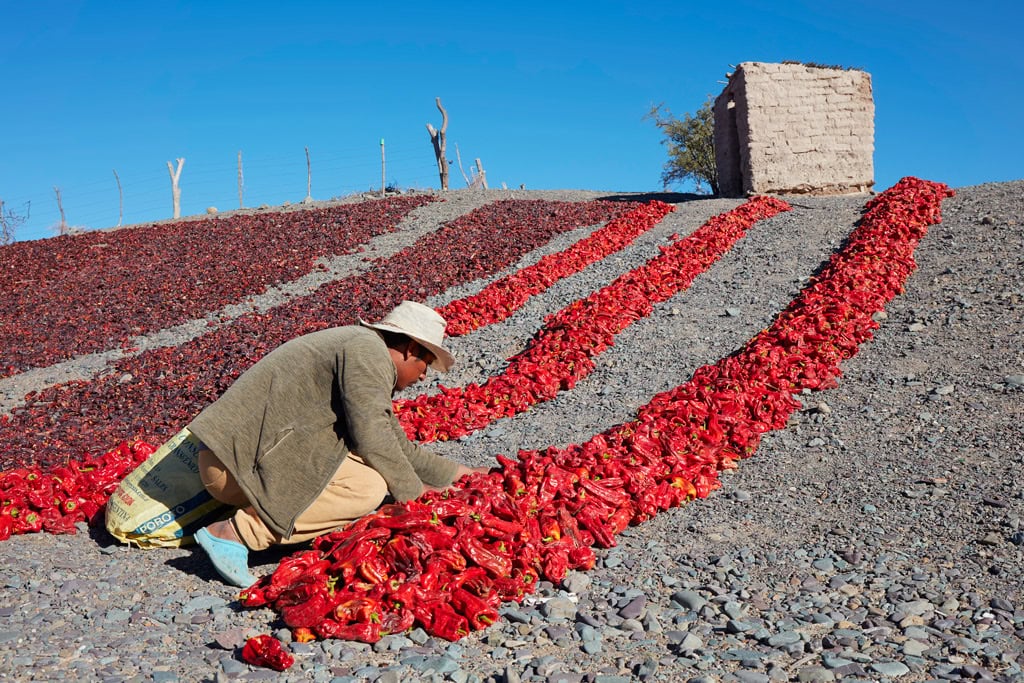
Festivals and Cultural Photography in the NOA
The Argentine Northwest has one of the richest festival calendars in Argentina — and for photographers, these are unmissable opportunities.
Carnival in the Quebrada (February): The Humahuaca Carnival is one of the most intensely visual events in Argentina. Over several days, the communities of the valley process through the streets in elaborate costumes, with brass bands, dancers, and the ritual “unearthing” of the Pachamama. It is loud, colourful, densely packed, and entirely authentic.
Fiesta de la Pachamama (August 1st): Celebrated across the entire NOA, this offering to Mother Earth is observed in both public and private rituals — bonfires, chicha, coca leaves, prayers. The smaller, more intimate versions, away from the tourist circuit, are the most powerful to photograph.
Serenata a Cafayate (February): An open-air folk music festival in Cafayate, held against the backdrop of the Andean peaks, that draws musicians from across Argentina.
Religious processions and patron saint festivals: Throughout the year, the smaller towns and villages of the NOA hold processions and celebrations that are rarely covered by travel photography. Our local guides know the calendar.

Photography Guide: Best Locations in the Argentine Northwest
Each destination in the NOA offers a distinct photographic environment — different light, different subjects, different energy.
Salta city is best for colonial architecture, cultural life, and as a logistical base. Morning at the central market, blue hour at the cathedral, and a visit to MAAM are the priorities.
Purmamarca rewards patience. Arrive early, walk the circuit behind the Cerro de los Siete Colores before the town wakes up, and stay through golden hour. The morning handicraft market on the main square is also excellent for portrait opportunities.
Tilcara is the most versatile town in the Quebrada — Pucará de Tilcara, museums, festivals, and good access to surrounding villages like Maimará and Huacalera.
Humahuaca and the Hornocal require an early start and solid logistics. The reward — a ridge of multicoloured mountains rising above 4,000 metres — is worth every effort.
The Puna (Salinas Grandes, Antofalla, Piedra Pómez, Arizaro) is the domain of the dedicated landscape photographer. Plan multi-day circuits, always in a 4×4 with an experienced guide, and build in time for the unexpected.
Cafayate and the Calchaquí Valleys combine landscape, wine culture, and colonial architecture in a format that suits a range of photographic interests.

Best Seasons for Photography Tours in the NOA ☀️
October–December and March–May are the best months to visit the Argentine Northwest. Temperatures are pleasant at altitude, the light is excellent, and logistics are manageable across most of the region.
June–August can be tempting for its dry, clear skies — but temperatures in the Puna drop severely at night. Factor this in carefully if you are planning a Puna circuit in winter.
Summer (December–February) is the rainy season, particularly for the Quebrada de Humahuaca. Rain can make dirt roads difficult, limiting access to some of the most rewarding off-road locations.
Carnival (February) is the one exception: if cultural and portrait photography is your primary goal, the Humahuaca Carnival is worth planning around despite the rain risk — just be prepared to be flexible with logistics.
Practical Tips for Photography Tours in the Argentine Northwest 📸
Gear for the Puna: The high-altitude environment is demanding on equipment. Dust and sand are constant — a well-sealed bag and a blower brush are essential. The intense UV light at altitude affects exposure more than at sea level; what looks correctly exposed on your screen may be brighter than expected. Check your histogram.
Battery life: Cold temperatures drain batteries faster than anything else. Always carry at least two fully charged spares per camera body, and keep them in an inner pocket close to your body when not in use.
Shooting at altitude: The thin air of the Puna produces a clarity and colour saturation that is extraordinary — but it also means the sun moves fast and the light changes quickly. Golden hour windows are shorter than you expect. Be in position early.
Night Photography: The Puna offers some of the finest astrophotography conditions in Argentina. A wide-angle lens, a sturdy tripod, and a remote shutter release are all you need — the skies do the rest.
Photography Tours in the Argentine Northwest
Frequently Asked Questions
Not at all. Our photography tours are designed to work for every level — from complete beginners who simply want to take better travel photographs, to working photographers looking for local access and insider knowledge of the light.
We adjust our guidance entirely to whoever is with us. Some clients want technical instruction; others want to be positioned correctly and left to work. We read the group and respond accordingly. The only goal that stays constant is that you go home with images you’re proud of.
Mixed Group Tours bring together between 3 and 9 photographers.
Private tours are just your group — your own pace, your own guide, no one else’s schedule to follow.
It depends on the destination.
Tours in the Quebrada de Humahuaca and the Calchaquí Valleys are relatively accessible. The Puna requires good physical condition and acclimatisation — the altitudes involved (3,500–4,500 metres) are significant. We always build in rest and acclimatisation days in our Puna itineraries.
Bring what you own and are comfortable with.
For the Puna, we recommend wide-angle lenses for landscapes and a telephoto for wildlife (vicuñas, flamingos, condors). The altitude and dry conditions mean batteries drain faster — carry spares. Dust and sand are a constant in the Puna — a good quality bag and a blower brush are essential.
Yes. All our NOA tours are available as private group experiences, fully customised to your dates, interests, and duration. Contact us with your details and we’ll put together a tailored itinerary.
Book a Photo Tour in the NOA!
Tell us about your trip — where you want to go, when you can travel, what you want to photograph — and we’ll reply as soon as possible with a personalised itinerary and quote. All tours can be private. All programmes are flexible. The only fixed point is the quality of the experience we build for you.