
Gauchos and Estancias in Argentina
Gauchos and Estancias in Argentina: A Photographer's Journey from North to South
The gaucho is one of the most photographically compelling figures in the world — a horseman whose silhouette against an open sky, weathered face under a wide-brimmed hat, or gloved hands wrapped around a mate cup carries centuries of story in a single frame.
Deeply rooted in Argentine identity, gauchos were skilled horsemen and cattle herders who lived a semi-nomadic life across the Pampas, Patagonia, and the arid north. The estancias — large rural estates — became the centers of that life, and today they remain the best places to photograph it authentically.
Traveling from the northern provinces to the southern reaches of Patagonia is not just a cultural journey; it is a progression of extraordinary photographic environments — from Andean mountain light to the sweeping golden horizons of the Pampas and the dramatic, wind-scoured plains of Patagonia.
Looking for a Private Tour?
We can modify the itineraries and duration according to your needs and travel dates.
GAUCHOS AND ESTANCIAS PHOTO TOURS
In the Cradle of Tradition
Gauchos in Patagonia
Traditional Sheep Ranch
Private, Tailor-Made Photo Tours
We put an Experienced Team of Travel Experts, Local and Photography Guides at your disposal to design our Tailor-Made Private Photo Experience.
A Photography Travel Experience entirely focused on your interests, whether it is Nature, Wildlife, People, Architecture, Landscape, Documentary, or Street Photography.
You can choose from any of the Destinations we offer, from Buenos Aires to the Argentine Northwest, the Iberá Wetlands and Misiones, to the remote Patagonia and Tierra del Fuego.
If you have a destination in mind that is not listed on our website, please ask us. We respond quickly.
The APW Signature: Premium Service Add-ons
We elevate your Photography Expedition with services designed for the traveler seeking Comfort, Security, and Exclusivity in Argentina’s most remote corners.

Private 4x4 Transportation
Exclusive mobility in vehicles equipped for rugged terrain, ensuring safe access to remote locations in Patagonia or the Puna.

Curated Accommodations
A handpicked selection of boutique hotels and historic estancias that blend local charm with high-end comfort standards.

24/7 Bilingual Logistics
Full technical and coordination support in both Spanish and English throughout your journey for a completely stress-free experience.

Photographing Gauchos of the Argentine Northwest
In the Northwest provinces of Salta and Jujuy, gauchos carry both Andean and horse-riding traditions — and the combination creates imagery unlike anywhere else in Argentina. The dramatic mountain backdrops, terracotta earth tones, and high-altitude light give portraits a natural intensity that is difficult to replicate.
For photographers, the key opportunities here are the horseback pilgrimages — events like the Cabalgata a la Virgen de Urkupiña in Salta, where faith, community, and horsemanship converge in scenes of genuine documentary power. The Calchaquí Valley estancias, where vineyards and livestock share the landscape, offer extraordinary wide environmental compositions as well as intimate portrait access.
The Pampas: The Heartland of Gaucho Photography
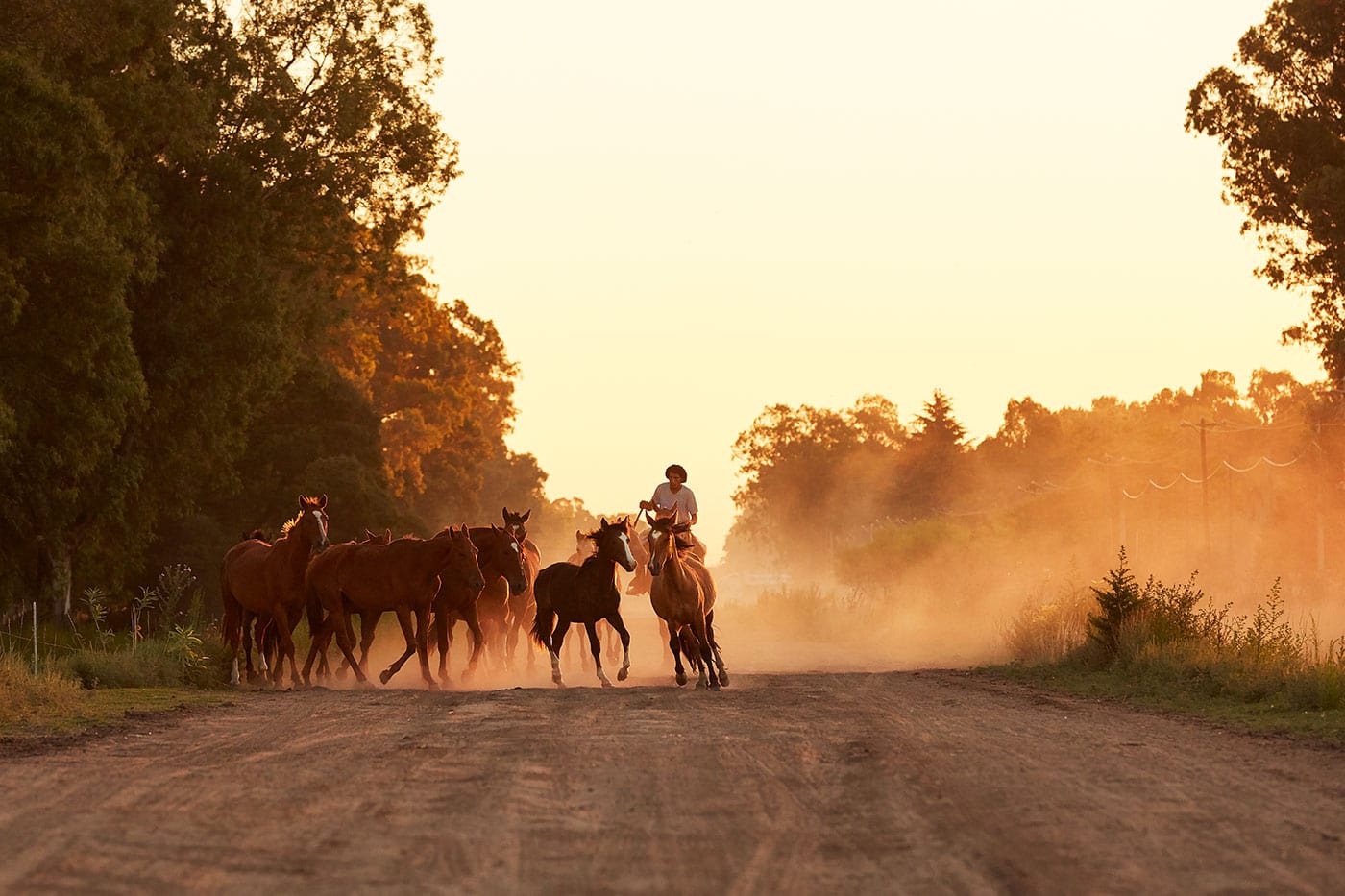
The Pampas — stretching across Buenos Aires, Santa Fe, La Pampa, and Córdoba — is the cradle of gaucho culture and arguably the most accessible region for photographers. The landscape is deceptively simple: flat, open, and endlessly expansive. That openness is the gift. A galloping gaucho at golden hour against an unbroken horizon, a silhouette of horse and rider at dusk — images that are impossible to make anywhere else.
The historic estancias near Buenos Aires offer structured access to demonstrations of horsemanship, cattle work, and traditional asado gatherings. For photographers, these are not tourist performances but genuine working environments where patience and rapport reward you with real moments: the squint of a gaucho lighting a fire, the easy authority of a skilled rider bringing cattle into line.

The Mesopotamia: Gauchos of the Wetlands
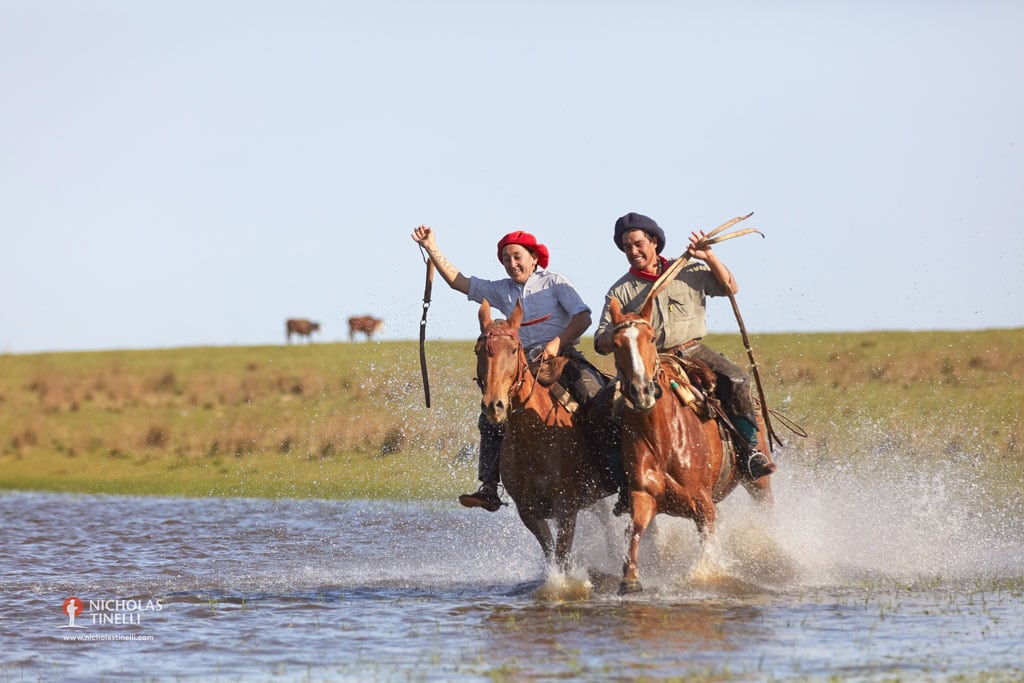
In Entre Ríos, Corrientes, and Misiones, gaucho culture merges with one of Argentina’s most visually spectacular environments: the wetlands. Estancias in the Iberá Wetlands region offer something unique — gauchos working on horseback through shallow lagoons, cattle moving through marshland with water reflecting the sky beneath their hooves.
The combination of wildlife, water, wide skies, and human subjects makes this one of the most layered and rewarding regions for photography. Early morning mist over the lagoons, backlit riders moving cattle at sunrise — the Mesopotamia rewards photographers who are willing to be in position before the light arrives.
Gauchos, Wine, and the Andean Foothills
In Mendoza and San Juan, the gaucho works against a backdrop of vineyards and the jagged spine of the Andes — a compositional gift for landscape-oriented photographers. The dry, crystalline Andean light is some of the best in the country for color rendering and shadow detail.
The tradition of transhumance — moving livestock between mountain pastures with the seasons — creates rare opportunities to photograph gauchos in motion through high-altitude terrain, with the Andes rising dramatically behind them.
The Patagonian Gaucho
Patagonia saves the most demanding and most rewarding gaucho photography for last. The estancias here are enormous — thousands of hectares of wind-scoured steppe, dedicated primarily to sheep farming. The light in Patagonia is unlike anywhere in Argentina: low, lateral, and extraordinarily long at both ends of the day, lasting well past 9pm in high summer.
The Patagonian gaucho is a different character — quieter, more weathered, shaped by isolation and harsh winters. Building access takes time and patience, but the resulting portraits carry an authenticity that is immediately felt in the image. Historic estancias around El Calafate and Tierra del Fuego add architectural and historical depth to the photographic story.
Photographing the Historic Estancias of Tierra del Fuego
Beyond the dramatic peaks and windswept channels of the world’s southernmost frontier lies a landscape shaped by history, solitude, and the rugged traditions of Patagonian ranch life. For travel and landscape photographers, the historic estancias (working ranches) of Tierra del Fuego offer a rare, immersive glimpse into an era largely untouched by time.
From the pioneer heritage of Estancia Harberton—the oldest ranch in the region, founded in 1886—to the massive, isolated outposts bordering the Atlantic coast and the interior steppes, these estates provide an incredible tapestry of visual narratives. Here, weathered wooden barns, rustic shearing sheds, and endless fences cut through vast grasslands, all framed by the jagged, snow-dusted peaks of the Southern Andes.

Estancias in Argentina: A Living Heritage
From the colorful highlands of the northwest to the windswept plains of Patagonia, gauchos and estancias are central to Argentina’s cultural identity. Though modernity has transformed rural life, the traditions of horsemanship, rural hospitality, and deep connection with the land remain alive. For travelers, exploring estancias across the country is not only a journey into Argentina’s past but also a chance to witness how gaucho culture continues to shape its present.

San Antonio de Areco: Where Gaucho Photography Begins
For most photographers, San Antonio de Areco — 113 km northwest of Buenos Aires — is the natural starting point. Declared the National Capital of Tradition, Areco is where gaucho culture is most concentrated, most accessible, and most visually rich.
The cobblestone streets, colonial facades, working estancias, and plateros (silversmiths) hammering finely decorated belts and knives offer a full day of varied shooting.
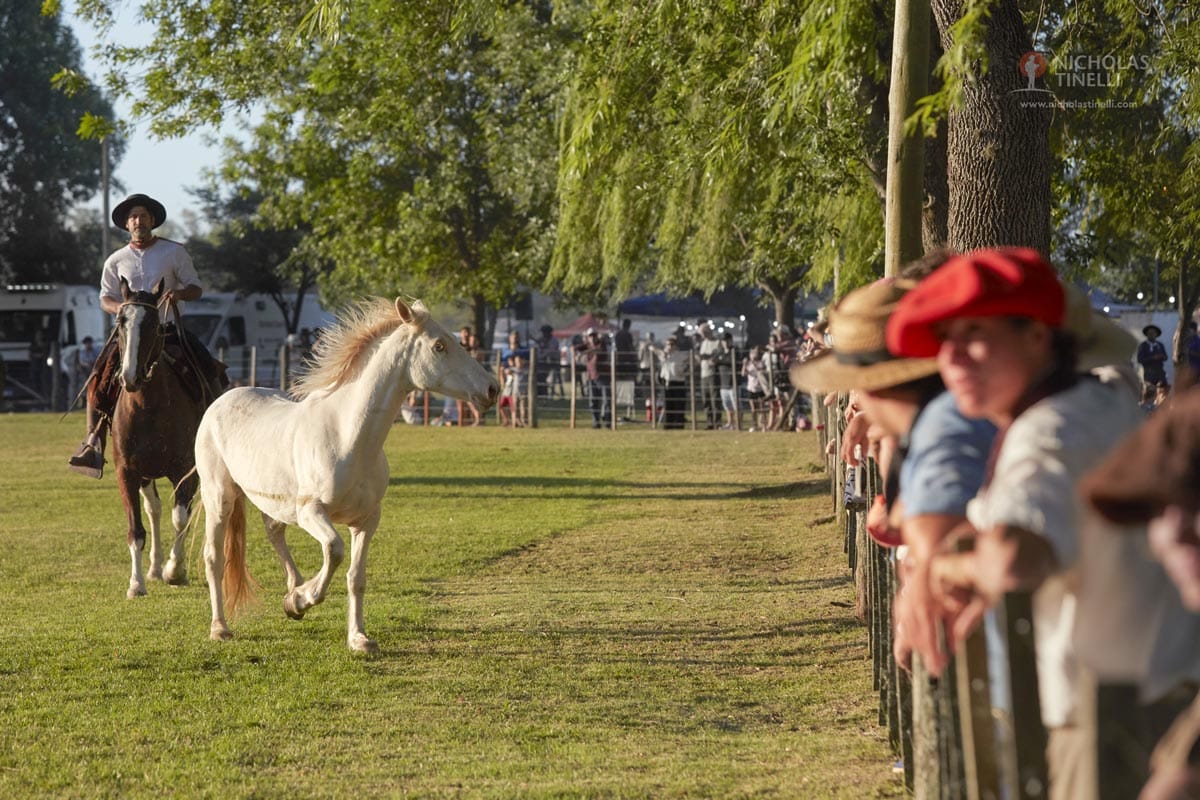
But the real prize is the Fiesta de la Tradición each November — Argentina’s most important gaucho festival, where riders in full traditional dress parade, compete in horseback skill events (destrezas criollas), and gather for music and feasts. For a documentary photographer, there are few events in South America that match it.
Practical Tips for Estancia and Gauchos Photography
Best Light Moment: Working with gauchos during the golden hour, both at sunrise and before sunset, is key to get striking images.
Work the Calendar: Time your visit around specific events — shearing, branding, cattle drives, or festivals. These are where the genuine action and emotion live.
Build Rapport: Ask your guide to introduce you before you raise a camera. A shared mate opens more doors and really helps to get a connection with your subject.
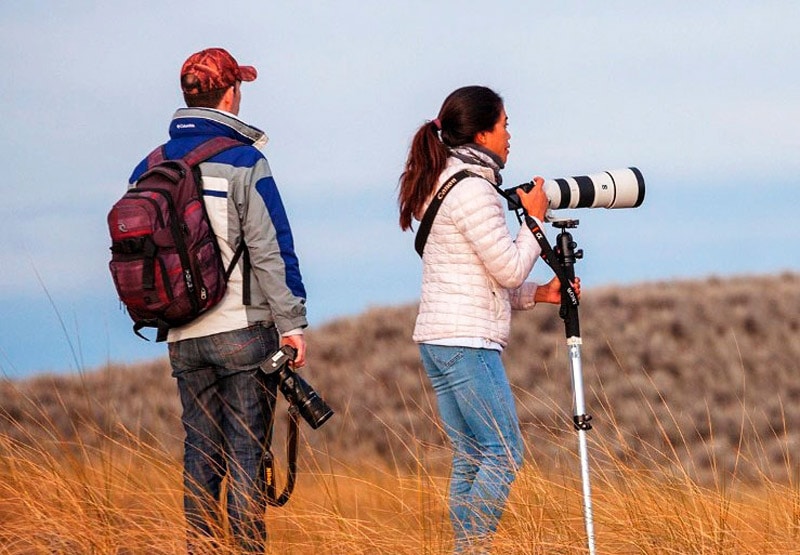
Key Gear: A 70-200mm f/2.8 for candid working shots and compressed portraits; a 24-70mm for environmental context; weather sealing for dust and wind; extra batteries for cold Patagonian mornings.
Clothing: Dress practically — sturdy boots, layers for Patagonia, and nothing that marks you as a tourist rather than a guest.
Access: Estancias near Buenos Aires are a short drive from the city. Those in Patagonia and the Northwest require longer journeys, often on unpaved roads — overnight stays are strongly recommended and dramatically improve photographic access.
Gauchos Photography Tours
Frequently Asked Questions
Not at all. Our photography tours are designed to work for every level — from complete beginners who simply want to take better travel photographs, to working photographers looking for local access and insider knowledge of the light.
We adjust our guidance entirely to whoever is with us. Some clients want technical instruction; others want to be positioned correctly and left to work. We read the group and respond accordingly. The only goal that stays constant is that you go home with images you’re proud of.
Mixed Group Tours bring together between 3 and 9 photographers.
Private tours are just your group — your own pace, your own guide, no one else’s schedule to follow.
Gauchos offer a mix of portraiture, action, landscape, and documentary photography, so a versatile kit is key.
Lenses (the most important choice)
A mid-range zoom like a 24-70mm f/2.8 is your workhorse — flexible enough for environmental portraits and wide establishing shots. Pair it with a 70-200mm f/2.8, which is arguably the most valuable lens for this work: it lets you shoot candidly from a distance without interrupting the action during cattle drives or horse breaking, and the compression flatters portraits beautifully.
A 50mm or 85mm prime at f/1.4–1.8 is worth considering for intimate gaucho portraits in low light (inside the galpón or around the fire at dusk).
Camera body
Prioritize weather sealing — dust, wind, and occasional rain are real factors on the pampa. A full-frame body gives you the edge in low light for those early morning and dusk shots. Bring a backup body if possible; you won’t want to miss a cattle drive because of a malfunction.
Key accessories
- Extra batteries — cold Patagonian mornings drain batteries fast, and estancias may not have easy charging points
- Lens hood — shooting into or across strong pampas light causes flare
- Neutral density filters — useful for motion blur on galloping horses
- A sturdy but compact tripod or monopod — monopods are better for fast-moving action
- Rocket blower and microfiber cloths — dust is a constant challenge in dry conditions
- Dry bags or a rain cover for your pack
Memory and storage
Shoot RAW. Bring more cards than you think you need and a portable SSD to back up each night.
Yes, and we enjoy it.
We have run photography experiences for groups ranging from two people to full photography clubs, travel journalists, and corporate teams.
Larger groups require more planning — multiple guides, staggered positions, coordinated logistics — but the result, when it works, is something special.
Send us your group size, your travel dates, and your collective interests, and we’ll put together a detailed proposal.
Book an Estancia Photo Tour!
Tell us about your trip — where you want to go, when you can travel, what you want to photograph — and we’ll reply as soon as possible with a personalised itinerary and quote. All tours can be private. All programmes are flexible. The only fixed point is the quality of the experience we build for you.