
Landscape Photography Workshops in Argentina
Unique Landscape Photography Workshops in Argentina & Tours
Argentina stretches across almost 4,000 kilometers of latitude, a huge country with a varied geography: glaciers, salt deserts, rivers that weave through jungles, and endless horizons shaped by wind. For Landscape Photographers, this is more than scenery — it’s an environment where conditions change constantly, testing your skills and sharpening your vision.
Our Landscape Photography Workshops in Argentina are designed to immerse you into the most exceptional settings — from the force of Iguazú Falls to the remote beauty of Patagonia and the captivating mountain landscapes of the Northwest (NOA).
Looking for a Private Tour?
We can modify the itineraries and duration according to your needs and travel dates.
LANDSCAPE PHOTOGRAPHY WORKSHOPS & TOURS
4x4 Off-Road Adventure
A Burst of Warm Colors
Patagonian Landscapes

Private, Tailor-Made Photo Tours
We put an Experienced Team of Travel Experts, Local and Photography Guides at your disposal to design our Tailor-Made Private Photo Experience.
A Photography Travel Experience entirely focused on your interests, whether it is Nature, Wildlife, People, Architecture, Landscape, Documentary, or Street Photography.
You can choose from any of the Destinations we offer, from Buenos Aires to the Argentine Northwest, the Iberá Wetlands and Misiones, to the remote Patagonia and Tierra del Fuego.
If you have a destination in mind that is not listed on our website, please ask us. We respond quickly.
The APW Signature: Premium Service Add-ons
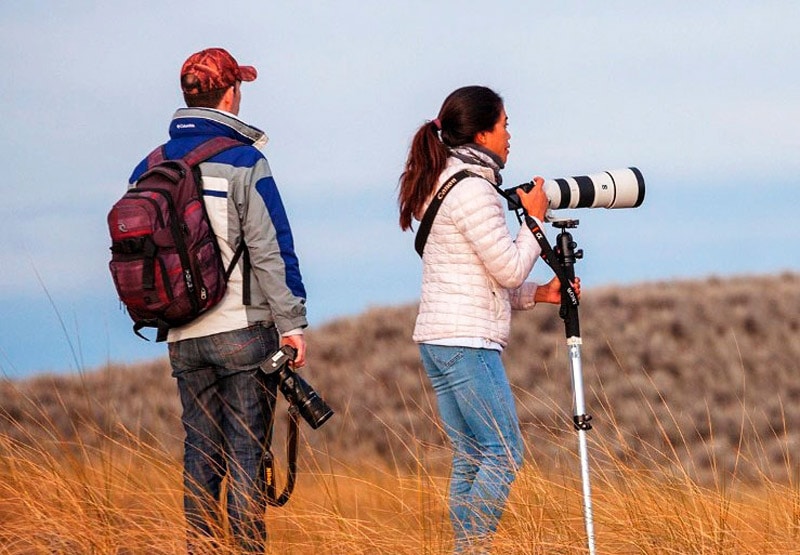
We elevate your Photography Expedition with services designed for the traveler seeking Comfort, Security, and Exclusivity in Argentina’s most remote corners.

Private 4x4 Transportation
Exclusive mobility in vehicles equipped for rugged terrain, ensuring safe access to remote locations in Patagonia or the Puna.

Curated Accommodations
A handpicked selection of boutique hotels and historic estancias that blend local charm with high-end comfort standards.

24/7 Bilingual Logistics
Full technical and coordination support in both Spanish and English throughout your journey for a completely stress-free experience.

The Immense Landscapes of Patagonia
At the southern edge of the continent, Patagonia offers landscapes sculpted by ice and time. The peaks of Fitz Roy and Cerro Torre mountains rise like sentinels above glacial valleys. Chalten is the most visited area, along with Calafate and Ushuaia, but the Patagonian landscape is much more. Other lesser-known destinations, such as Comodoro Rivadavia, offer unique adventures off the beaten path.
Photography Workshops here require dealing with sometimes extreme weather conditions. But it’s a worthwhile endeavor. Imagine a solitary tree in the steppe or a curvy river beneath storm clouds: landscapes that teach us the art of minimalism, images that look like paintings.
The Puna of Atacama: an Explosion of Colors
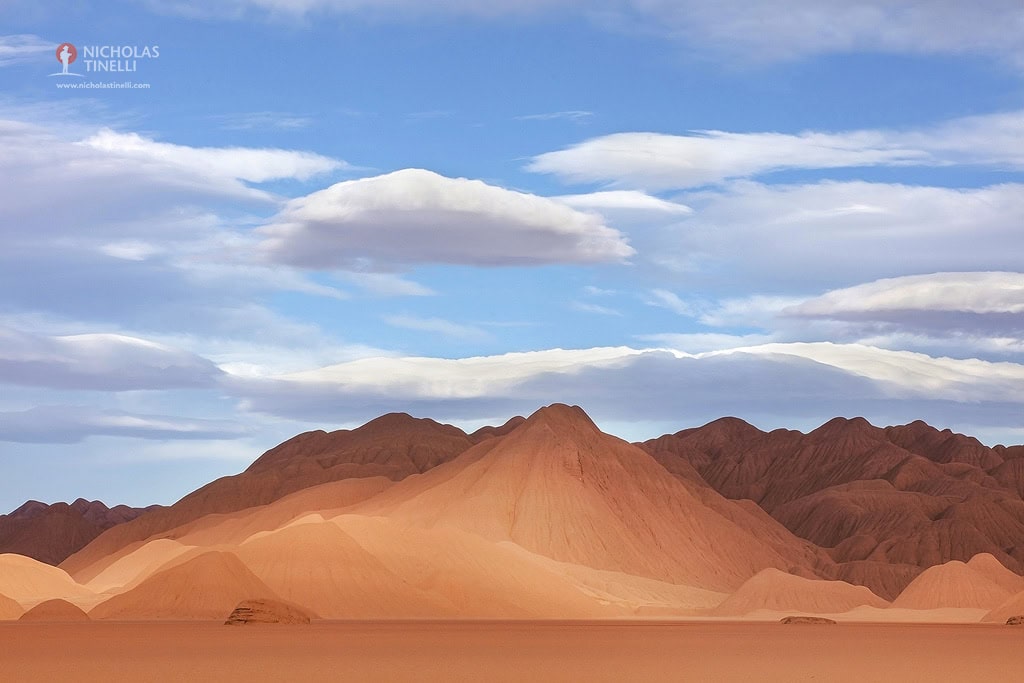
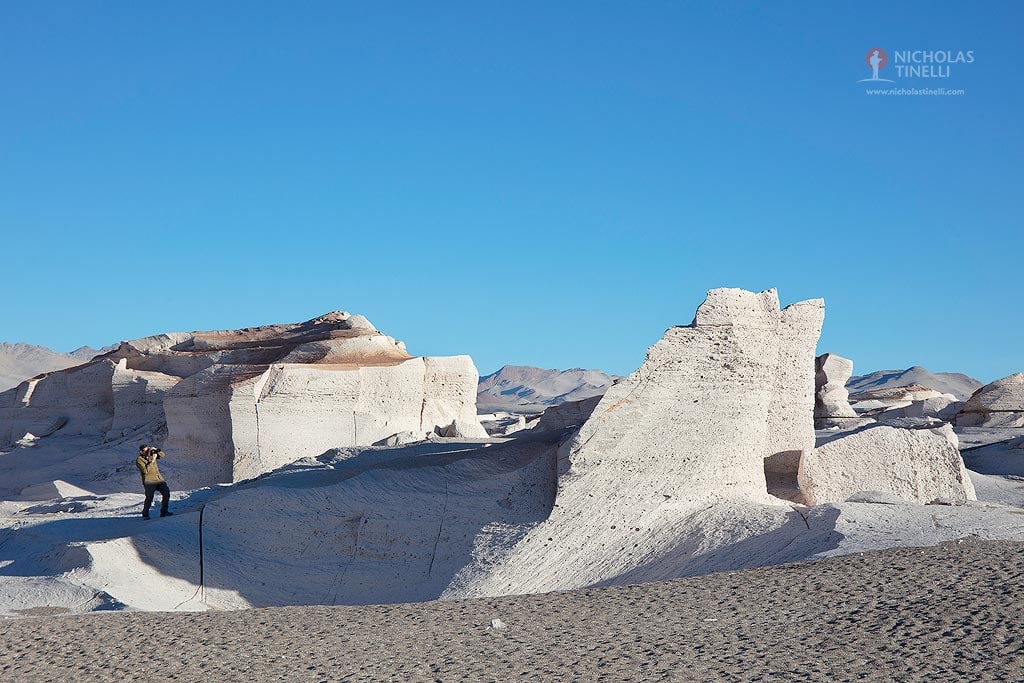
Further north, the High Plateau of Jujuy, Salta, and Catamarca Puna’s invite a completely different gaze. Here, the land is painted in lively colors — ochres, greens, and violets stacked in layers of mountains. Salt flats stretch like mirrors of the sky, while volcanic plateaus hold lagoons the color of lapis lazuli.
Photographing at 3,500 – 4,000 meters forces a slower pace: not only because of the thin air, but because the immensity demands contemplation. Workshops here focus on form and rhythm — the geometry of cacti, adobe villages, and eroded cliffs — and how to place the human scale within a landscape that dwarfs us.
Mesopotamia: Iguazu Falls & the Tropical Forest
In Argentina’s Mesopotamia, water dominates the landscape. In Misiones, Iguazú Falls are a testament to the power of nature and a true wonder.
Long exposures transform the waterfalls into silk; fast shutter speeds freeze their pure power. Beyond the falls, the tropical rainforest surrounding Iguazú presents a different challenge: working with humidity and dense vegetation.
The Endless Pampas Plains
The vast plains may seem too simple at first, but this is where the subtleties of light reveal themselves most clearly. A Photography Workshop in the Pampas means working with space: how to compose when there are no mountains, no waterfalls, no dramatic forms.
The Pampas Plain landscape offers its own cast: herds at pasture, traditional estancias, and quiet lagoons, with clouds adding movement and the light on the fields evolving throughout the day. Often combined with life in the estancias, these workshops bring a documentary edge: gauchos on horseback, the dust of cattle, silhouettes against fiery sunsets.

What Participants Can Learn in a Landscape Photography Workshop
1. Mastering Light in Nature
How to work with golden hour and blue hour.
Understanding natural light.
Long exposure techniques for rivers, waterfalls, and night skies.
2. Composition & Perspective
Framing landscapes for depth and balance.
Using leading lines, textures, and scale to create impact.
Exploring different focal lengths—from wide angles to telephoto—for varied results.
3. Camera Settings for the Outdoors
Managing exposure in high-contrast scenes.
Using aperture for depth of field and sharpness.
Working with filters (polarizers, ND) to enhance results.
4. Storytelling Through Landscapes
Capturing seasonal changes, wildlife in context, and human interaction with the environment.
Building a series of images that convey the spirit of a location.
5. Field Practice & Feedback
On-location shooting with real-time guidance.
Immediate feedback on composition and technique.
Learning to adapt to unexpected challenges—changing light, weather, or conditions.
Beyond Technique: The APW Experience
A Photography Workshop in Argentina is not just a classroom transplanted outdoors. It is an immersion — long days that begin in the dark before dawn, hikes to vantage points, afternoons editing with the sound of wind or birds outside, evenings around shared meals where images are reviewed with candor and curiosity.
Guidance is practical, yes — filters, exposures, editing workflows — but also philosophical: how to convey the essence of a place into a single frame, how to create a body of work that feels like a narrative rather than a postcard collection.

Who Comes, and Why
These workshops attract those really interested in telling stories through images — photographers who wish to slow down, to learn patience, to see landscapes as a way lo live an experience, enjoy a moment together in the wilderness.
Beginners find confidence in their vision, while advanced photographers find a faster way to create content they need, supported by local expert guides.
The diversity of Argentina ensures that every trip is unique.
Practical Tips for Landscape Photography in Argentina
Altitude: In the Northwest, some locations exceed 3,500 meters. Acclimatize slowly, stay hydrated, and avoid overexertion the first days.
Clothing: Layered clothing is essential — Patagonia’s weather can swing from sun to very cold in hours. A windproof outer shell is a must.
Footwear: Comfortable, waterproof hiking boots are indispensable for both mountain trails and muddy jungle paths.
Transport: Distances are vast; domestic flights save time, while private drivers ensure flexibility in remote areas.
Patience: Weather often changes quickly; dramatic skies frequently appear after storms or cloudy spells.
Backup: Always carry multiple memory cards and a reliable system for backing up images on the road.
Landscape Photography Tours
Frequently Asked Questions
Not at all. Our photography tours are designed to work for every level — from complete beginners who simply want to take better travel photographs, to working photographers looking for local access and insider knowledge of the light.
We adjust our guidance entirely to whoever is with us. Some clients want technical instruction; others want to be positioned correctly and left to work. We read the group and respond accordingly. The only goal that stays constant is that you go home with images you’re proud of.
Mixed Group Tours bring together between 3 and 9 photographers.
Private tours are just your group — your own pace, your own guide, no one else’s schedule to follow.
When it comes to Landscape Photography, your goal is to maximize image sharpness, dynamic range, and focal versatility while keeping your pack manageable for the trail.
Here is a checklist of the essential camera equipment you should bring, broken down by category:
1. Camera Body
High-Resolution Sensor: Look for full-frame cameras with high megapixel counts (30MP to 61MP+). This allows you to capture immense detail and gives you room to crop if needed.
Excellent Dynamic Range: Essential for capturing both the bright highlights of a sunrise and the deep shadows of a mountain valley in a single frame.
Weather Sealing: Crucial for protecting your gear against unexpected rain, wind-blown dust, or ocean spray.
2. The Lens Trio (Focal Length Versatility)
Rather than carrying a dozen lenses, a classic landscape kit relies on three high-quality zoom lenses to cover almost any scenario:
The Ultra-Wide Zoom (e.g., 16-35mm or 14-24mm): Your bread and butter for sweeping vistas, dramatic foreground elements, and astrophotography/night skies.
The Standard Zoom (e.g., 24-70mm): The most versatile lens in your bag. It closely mimics human vision and is perfect for mid-range landscapes, stitching panoramas, and general documentary shots.
The Telephoto Zoom (e.g., 70-200mm or 100-400mm): Often overlooked by beginners, but vital for professionals. A telephoto lens allows you to isolate distant peaks, compress layers of mountains, and capture abstract patterns in nature.
3. Stability
Sturdy Tripod & Ball Head: A rock-solid tripod is non-negotiable for sharp images, especially during the golden hours, blue hours, or for long exposures. Look for carbon fiber to save weight without sacrificing stability.
L-Bracket: A quick-release plate shaped like an “L” that allows you to flip your camera from landscape to portrait orientation instantly while keeping the center of gravity directly over the middle of the tripod.
4. Filters
While digital processing can do a lot, some optical effects must be achieved in-camera:
Circular Polarizer (CPL): Cuts through reflections on water, reduces glare on wet leaves or rocks, and boosts contrast and saturation in the sky.
Neutral Density (ND) Filters: Think of these as sunglasses for your lens. A 6-stop or 10-stop ND filter allows you to blur moving water (waterfalls, oceans) or moving clouds into smooth, ethereal textures even in broad daylight.
Graduated Neutral Density (GND) Filters: Dark at the top and clear at the bottom, these help balance the exposure between a bright sky and a dark foreground.
- Note: Many modern photographers now bracket exposures and blend them in post-processing instead of using GND filters.
5. Critical Accessories
Remote Shutter Release: A cable release or wireless remote ensures you don’t introduce camera shake when pressing the shutter button. (Alternatively, you can use your camera’s built-in 2-second timer).
Extra Batteries & Lens Cleaning Kit: Cold weather drains batteries fast—always carry spares in an inside pocket close to your body heat. Bring microfiber cloths and a rocket blower for dust and mist.
Memory Cards: High-capacity, weather-resistant cards. It’s usually safer to carry a few mid-sized cards (e.g., 64GB or 128GB) rather than putting all your images on a single massive card.
Yes, and we enjoy it!
We have run photography experiences for groups ranging from two people to full photography clubs, travel journalists, and corporate teams.
Larger groups require more planning — multiple guides, staggered positions, coordinated logistics — but the result, when it works, is something special.
Send us your group size, your travel dates, and your collective interests, and we’ll put together a detailed proposal.
Book a Landscape Photo Workshop!
Tell us about your trip — where you want to go, when you can travel, what you want to photograph — and we’ll reply as soon as possible with a personalised itinerary and quote. All tours can be private. All programmes are flexible. The only fixed point is the quality of the experience we build for you.