
Photography Tours in Buenos Aires
Discover the city through your lens during Photography Workshops in Buenos Aires, guided by Local Professional Photographers.
Buenos Aires is one of the most photogenic cities in the world — and one of the most layered. Behind its grand European facades lie cobblestone streets that smell of coffee and leather, milongas where tango was born, markets overflowing with colour and character, and a street art scene that rivals any capital on earth.
Our Photography Tours are designed for travellers who want more than snapshots. Whether you have three hours or a full day, we’ll take you to the right places at the right light, with a local photographer at your side who understands both the city and the craft.
From the golden hour over Recoleta to the vivid murals of Palermo, from a private tango session in San Telmo to the rooftops above the skyline, Buenos Aires never looks the same twice.
Let us show you the version most visitors never see.
BUENOS AIRES PHOTO TOURS / WORKSHOPS
3 to 4 Hours (it can be extended)
3 to 4 Hours (it can be extended)
📸 Why Buenos Aires for Photography?
Buenos Aires Through a Photographer's Eye
Few cities in the world offer such a variety of photographic subjects within such a walkable, navigable area. Buenos Aires rewards patience and curiosity in equal measure — and it changes completely depending on the time of day, the neighbourhood, and the season.
Light
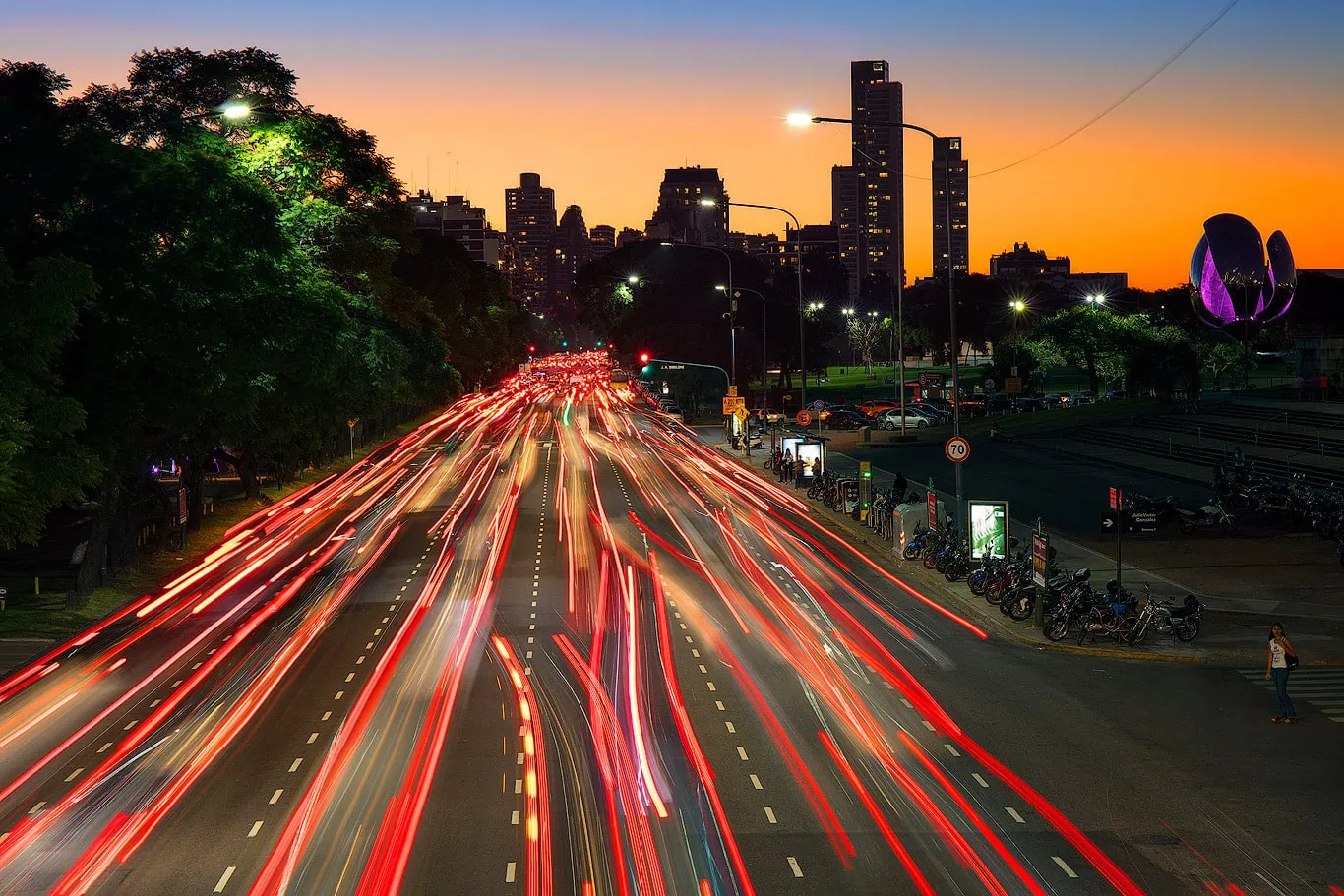
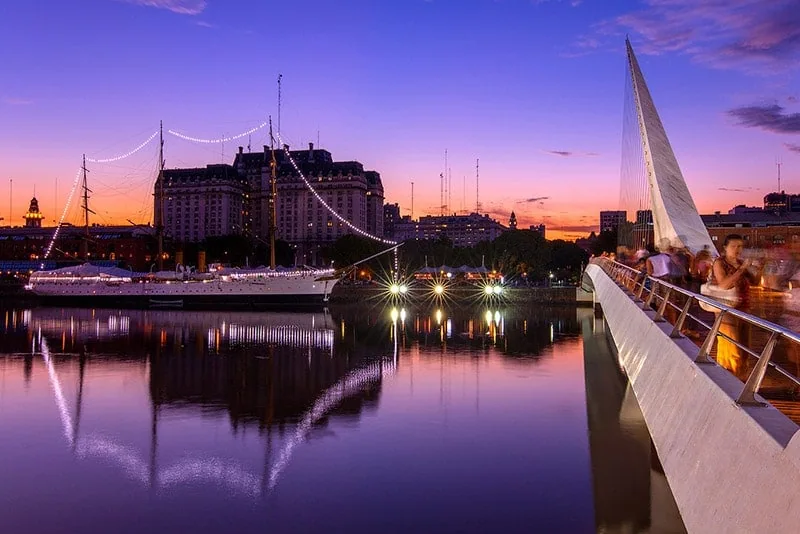
Buenos Aires rewards photographers who embrace the blue hour— that brief window just before sunrise and just after sunset when the sky turns a deep, luminous blue and the city's lights come alive. Puerto Madero at twilight, with the Puente de la Mujer bridge reflected in the still water of the docks, is one of the finest urban light experiences in Argentina and South America. If you're looking for street shots, Corrientes Avenue is the city's premier nighttime venue; the best time to photograph it is in late summer and early fall, when the evening light still lingers in the sky and blends perfectly with the Obelisk, and later with the glow of the theater marquees and café signs stretching to the horizon.
Architecture
Buenos Aires contains some of the finest 19th and early 20th century European-influenced architecture outside Europe itself — Beaux-Arts, Art Nouveau, Neoclassical — often sitting alongside modernist towers and crumbling colonial facades. The contrasts are endlessly interesting.
Street Life
The city's public spaces are genuinely lived in: markets, plazas, café terraces, street performers, and the slow ritual of the Sunday feria. For example, San Telmo on a Sunday morning, during the antiquity fair, is one of the best locations for street photos.
Colour
From the painted corrugated iron houses of La Boca to the vast murals of Palermo, Buenos Aires has an intensity of colour that is hard to find elsewhere. Even the cemeteries — Recoleta above all — offer extraordinary visual texture in the play of light and shadow across marble and stone.
Best Time of the Day
The photo opportunities are excellent throughout the day, but some locations are best at certain times. Twilight is definitely one of the best times for light. Midday light in Buenos Aires can be flat and harsh — use it for interior visits (the Ateneo, the Colon Theatre, the Fine Art Museum) and save your energy for the golden hours.
Best Seasons
Spring (September–November) and Autumn (March–May) offer the most pleasant temperatures and the best light quality. Summer (December–February) has long evenings but intense midday heat. Winter is mild and atmospheric, with frequent overcast skies that are ideal for street photography.
Buenos Aires and the Plaza de Mayo
The Plaza de Mayo is the historical and political heart of Buenos Aires, and one of the city’s most rewarding photographic subjects. The square is framed by the Casa Rosada, the Metropolitan Cathedral, and the Cabildo, each offering a different architectural character and a different relationship with light throughout the day.
Early morning, before the city fully wakes, the plaza has a stillness that is rare in a capital of this size. The warm stone facades catch the first light beautifully. By midday it fills with life — street vendors, protestors, tourists, pigeons — a continuous stream of human activity that rewards the patient street photographer. At twilight, the illuminated landmarks against a deep blue sky are classic Buenos Aires shots.
One moment worth planning your visit around: every day at sunset, the Grenadier Guard performs the flag-lowering ceremony in the Plaza de Mayo. Dressed in their historic Napoleonic uniforms, the Grenadiers march in formation with a precision and visual formality that is extraordinary to photograph. The combination of the ceremony, the warm evening light, and the Casa Rosada as a backdrop makes this one of the most compelling — and most overlooked — photographic opportunities in the city. Arrive 15 minutes early to find your position before the crowd gathers.
Architecture Worth Photographing
Buenos Aires contains some of the most photogenic architecture in South America — not because it is uniform, but because of its contradictions. Neoclassical facades sit next to Art Nouveau ironwork, modernist towers rise behind ornate Belle Époque cornices, and crumbling colonial walls line streets of glass and steel. The tension between eras is what makes it interesting.
A few subjects worth planning time around:
Recoleta Cemetery — best in the early morning when the light filters between the mausoleums and the crowds haven’t arrived. The play of shadow and texture on marble and stone is extraordinary. Allow at least 90 minutes.
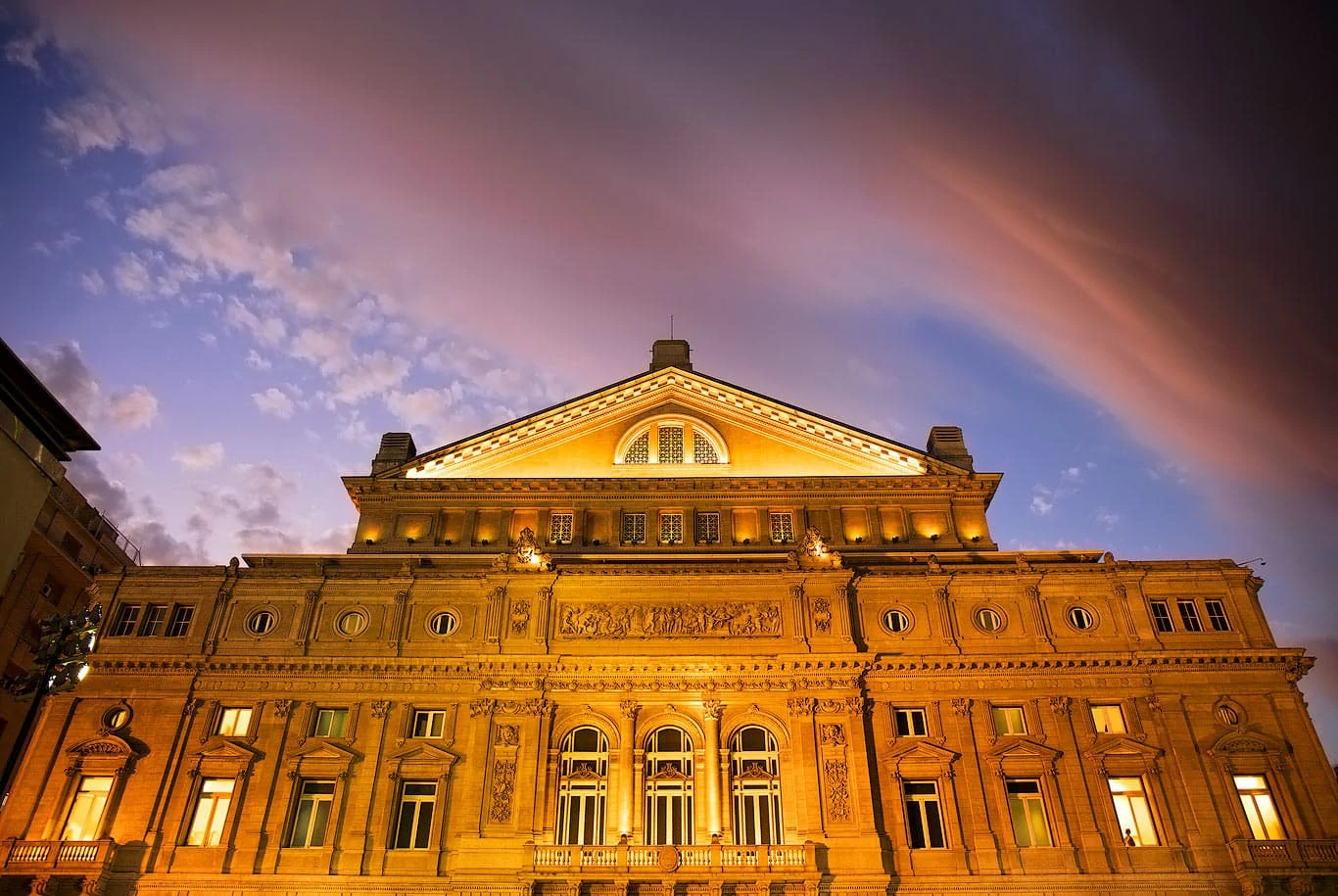
Teatro Colón — exterior shots work well at twilight when the building is illuminated. For the interior, join a guided tour during the day: the main hall, the golden balconies, and the painted ceiling are all exceptional photographic subjects under the venue’s own lighting.
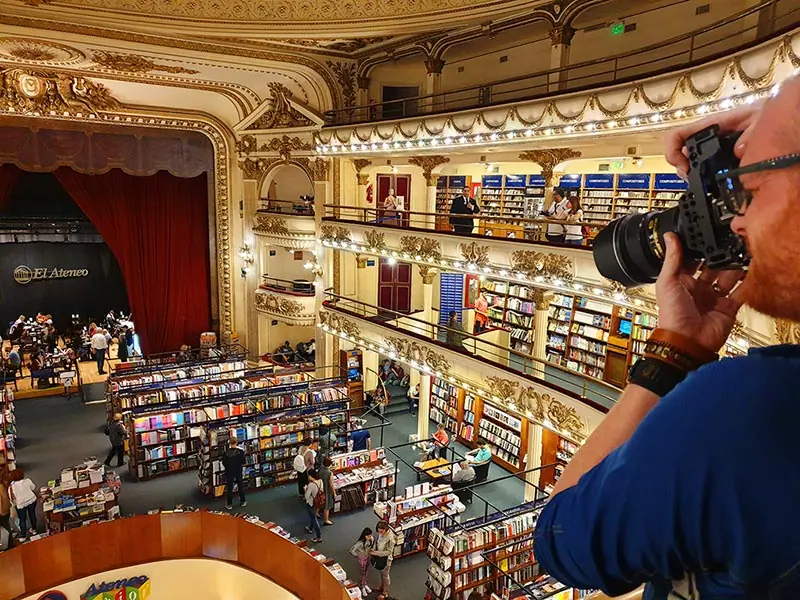
El Ateneo Grand Splendid — one of the most photographed interiors in Argentina. Shoot from the upper balconies looking down to capture the full drama of the converted theatre. Arrive when it opens to avoid crowds obscuring the floor.
Palacio Barolo — less visited than the others, but architecturally extraordinary and full of symbolic detail. The upper floors offer a remarkable view over the National Congress of Argentina and Congressional Square. Best to visit during the sunset guided tour.
Photography Tours in Buenos Aires: Art on the Streets
Buenos Aires has one of the most vibrant street art scenes in the world — and unlike many cities, it is genuinely accessible and constantly evolving.
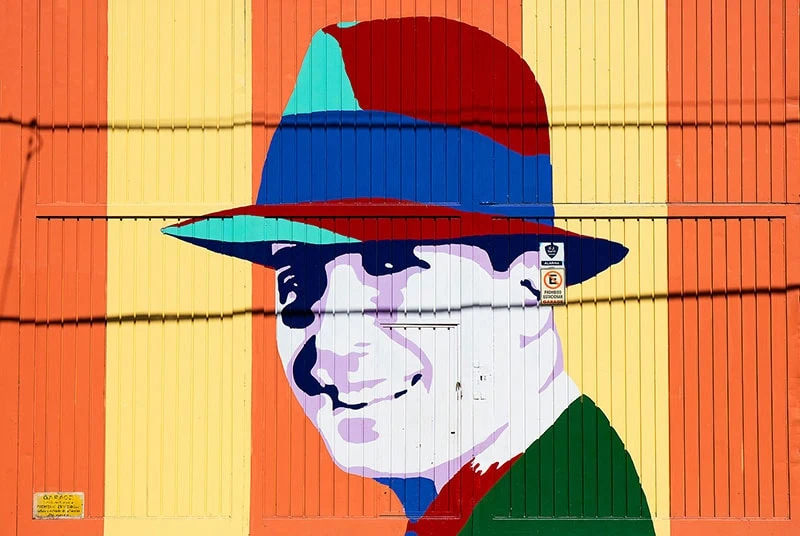
Palermo is the centre of it, particularly the streets around Thames, Malabia, and the surrounding blocks of Palermo Soho. New murals appear regularly; pieces you photographed six months ago may already have been painted over. It is a living gallery. The best light for shooting murals here is in the morning, when the sun hits the walls directly before the streets fill with traffic and parked cars.
La Boca and Caminito is the more touristic option — the brightly painted corrugated iron houses along the street are iconic, but the neighbourhood’s character extends well beyond the main drag. A few blocks away from the souvenir stalls, La Boca reverts to its working-class roots and offers a rawer, more authentic photographic environment.
For portrait photographers, both neighbourhoods have no shortage of character, local residents, café owners, market traders, for those willing to ask.
Tango as a Photographic Subject
Tango is not just a tourist attraction in Buenos Aires, it is a living part of the city’s identity, and as a photographic subject it is one of the most technically demanding and rewarding things you can attempt here.
The challenge is movement: tango is fast, fluid, and happens in low light. To photograph it well you need a fast lens, a high ISO tolerance, and ideally a subject who knows you are there.
Shooting candid at a milonga — La Catedral, Salon Canning, or the outdoor dancers at the San Telmo fair on Sunday mornings — will test your ability to anticipate movement and read the light.
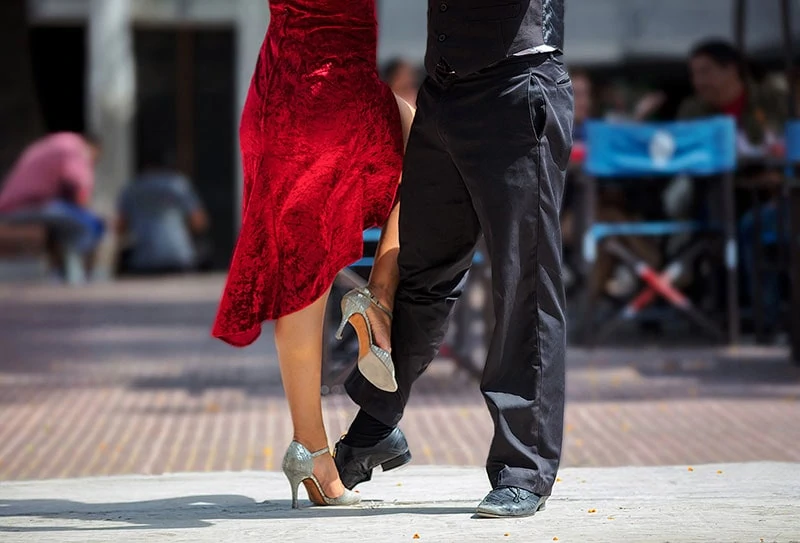
Shooting a Private Tango session with professional dancers gives you control over location, timing, and light, and typically produces stronger images.
If tango photography interests you, we offer dedicated private sessions with professional dancers at some of the city’s most evocative locations. → See our Private Tango Photoshoot
Neighbourhoods for Photography
Each of Buenos Aires’ major neighbourhoods offers a distinct photographic environment — different light, different subjects, different energy.
San Telmo is our first recommendation for street photography. Sunday morning during the antiques fair on Defensa Street is one of the most concentrated photographic experiences in the city: musicians, dancers, vendors, collectors, and a crowd that is genuinely engaged with the space. Arrive early, before 10am, to shoot before the crowds become the main subject.
Recoleta rewards architectural and detail photography: ornate facades, ironwork balconies, the cemetery, the cultural centre. The neighbourhood is quieter and more ordered than San Telmo, which suits a more considered, compositional approach.
Palermo and particularly Palermo Soho and Villa Crespo on its western edge — is best for street art, café culture, and the kind of relaxed urban street photography that doesn’t require the intensity of San Telmo.
Puerto Madero is the city’s newest neighbourhood and its most architecturally homogeneous. The Puente de la Mujer at blue hour, reflected in the still water of the old docks, is worth the visit.
La Boca is vivid, loud, and visually saturated. Best in the morning before the tourist circuit takes over. Go with a guide or a local if it is your first time.
Extras: Check out our Photo Guide to Buenos Aires.
Photo Tours in Buenos Aires
Frequently Asked Questions
Not at all. Our tours are designed for all levels — from complete beginners who simply want to take better travel photos, to advanced photographers looking for access and local insight. We adapt our guidance to whoever is with us. The goal is always that you go home with images you’re proud of.
Most of our Buenos Aires tours run between 4 and 6 hours, though we offer full-day options and can extend any experience on request. We generally recommend planning around golden hour — either sunrise or sunset — to make the most of the city’s best light.
Our tours are private by nature — you’ll be with your own group and your own photographer guide. This allows us to move at your pace, focus on your interests, and go wherever the light and the moment take us.
Whatever you have. Our job is to help you get the most out of the equipment you already own.
Yes, with common sense. We know which neighbourhoods are comfortable at which times of day, and we’ll always guide you through the city in a way that feels relaxed and safe. We do this every week — your wellbeing is part of what we plan for, not an afterthought.
Yes. We have experience with photography experiences for groups of all sizes, including corporate events, travel writer visits, and photography clubs. Contact us with your details and we’ll put together a tailored proposal.